
Similes for Loneliness help writers express the quiet, emotional, and sometimes overwhelming experience of being alone through vivid comparisons. Instead of simply saying someone feels lonely, a well-crafted simile can make readers see, hear, and feel that isolation.
In this guide, you’ll discover original comparisons for poetry, stories, essays, captions, and everyday writing, along with meanings, tones, explanations, and practical examples.
Definition of Similes for Loneliness
Similes for Loneliness are creative comparisons that describe loneliness by connecting it to another familiar person, object, place, feeling, or experience. They normally use words such as “like” or “as” to show the comparison. For example, saying “Her loneliness was like an empty station after the last train” creates a stronger emotional image than simply saying “She was lonely.” (Grammarly)
These comparisons can express many forms of loneliness, including quiet isolation, emotional distance, homesickness, abandonment, longing, and the desire for connection.
What Is a Simile?
A simile is a figure of speech that directly compares two different things using words such as like or as. Writers use similes to make descriptions clearer, more memorable, and easier for readers to visualize. (Grammarly)
Example
- Her loneliness was like an empty chair at a crowded table.
- He felt as distant as a star beyond the clouds.
- The quiet room stood like a forgotten island.
- Her heart felt like a house with every window dark.
- He moved through the city like a shadow without a home.
A simile differs from a metaphor because a simile openly signals the comparison with words such as “like” or “as,” while a metaphor makes a direct comparison. (Grammarly)
Why Use Similes for Loneliness in Writing?
- Create vivid imagery: A strong comparison helps readers picture loneliness instead of merely reading about it.
- Express difficult emotions: Loneliness can feel abstract, but a familiar image can make the emotion easier to understand.
- Build emotional depth: A carefully chosen comparison can make a character’s isolation feel personal and powerful.
- Set the mood: Dark, quiet, cold, or empty comparisons can establish a sad or dramatic atmosphere.
- Make writing memorable: Original comparisons often stay with readers longer than plain descriptions.
- Show rather than tell: Instead of writing “He felt lonely,” you can show that feeling through an image.
- Add poetic style: Similes can give poems, stories, essays, and captions a more expressive voice.
- Connect with readers: Familiar experiences such as empty rooms, unanswered messages, or distant lights can make loneliness relatable.
Effective similes work best when the comparison has a clear connection and avoids tired clichés. Strong sensory details can also make the comparison more vivid. (Grammarly)
Types of Similes
Similes for Loneliness can take different forms depending on the emotion, image, and purpose. Some create simple pictures, while others develop an extended emotional scene. The following types can help you choose the right comparison for your writing.
Direct Emotional Similes
Direct emotional similes clearly compare loneliness with another emotional or physical experience. They work well when you want readers to understand the feeling immediately.
Example
- Loneliness felt like a weight resting on his chest.
- Her sadness was as deep as a well without a bottom.
- He felt like a forgotten song no one wanted to hear.
- Their separation was as cold as winter glass.
Nature-Based Similes
Nature-based similes connect loneliness with clouds, oceans, deserts, forests, stars, seasons, and other natural images. They often create a poetic and reflective mood.
Example
- She stood alone like a tree on a windless hill.
- His loneliness spread like fog across an empty valley.
- He felt as small as a single leaf in a vast forest.
- Her thoughts drifted like clouds with nowhere to settle.
Object-Based Similes
Object-based similes compare loneliness with familiar things such as empty chairs, locked doors, silent phones, or abandoned houses. They make abstract feelings easier to visualize.
Example
- His loneliness was like a phone that never rang.
- She felt like an unopened letter in a dusty drawer.
- The empty room felt as lonely as a chair no one used.
- His heart seemed like a house with every door locked.
Extended Similes
Extended similes develop a comparison across several details or sentences. They can work especially well in poetry, fiction, and reflective prose because they allow one image to carry an emotion for longer. (Grammarly)
Example
- Her loneliness was like an abandoned train station, quiet after the final departure, with only echoes moving through the halls.
- He felt like a lighthouse in a sea without ships, shining faithfully while nobody came close enough to see it.
- His heart was like a winter garden, still standing but waiting for something warm to return.
Writing Tips and Common Mistakes
Useful Tips
- Choose a clear connection: Make sure readers can understand why the two things belong together.
- Use sensory details: Think about what loneliness looks, sounds, feels, or even smells like.
- Match the tone: Choose peaceful images for quiet loneliness and darker images for intense isolation.
- Avoid overused comparisons: Fresh images usually create a stronger impression than familiar clichés. (Grammarly)
- Keep the comparison natural: Do not force an unusual image simply to sound creative.
- Consider your audience: A simple simile often works better for educational writing, while poetry can support more complex imagery.
- Show the emotion: Let the comparison communicate the feeling rather than explaining it repeatedly.
- Use restraint: Too many similes in one paragraph can weaken their individual impact.
- Read the sentence aloud: If the comparison sounds awkward, revise it.
- Give each image a purpose: Every simile should strengthen the emotion, character, setting, or message.
Common Mistakes to Avoid
- Using clichés: “Lonely as a cloud” may feel familiar because Wordsworth famously used a similar comparison in I Wandered Lonely as a Cloud. (Literary Devices)
- Making unclear comparisons: “His loneliness was like a blue pencil” does not communicate a clear shared quality.
- Mixing unrelated images: Avoid jumping from oceans to clocks to mountains in one short sentence without purpose.
- Overexplaining the simile: A strong image should not need several sentences explaining what it means.
- Using a metaphor instead: “His loneliness was an island” is a metaphor, while “His loneliness was like an island” is a simile.
- Repeating the same image: Using “empty room” several times can make writing feel predictable.
- Choosing an image that clashes with the mood: A cheerful comparison can weaken a serious scene.
- Forcing “like” or “as”: The comparison should sound natural rather than mechanically constructed.
Similes for Loneliness (Main Section)
Loneliness Like an Empty Train Station
Meaning: Loneliness feels like being left behind after everyone else has departed.
Detailed Explanation: An empty train station suggests movement, separation, and waiting. It works especially well for characters who expected someone to arrive or stay but now face silence.
Tone: Poetic, melancholic, reflective.
Examples:
- Her loneliness was like an empty train station after the final departure.
- He waited in silence like a traveler forgotten by every train.
- The house felt like a station after midnight, filled only with echoes.
Loneliness Like a Lighthouse Without Ships
Meaning: Loneliness can feel like offering light and guidance while receiving no connection in return.
Detailed Explanation: A lighthouse continues shining even when no ships appear. This comparison suits someone who cares deeply for others but feels unseen or forgotten.
Tone: Poetic, hopeful, bittersweet.
Examples:
- His loneliness was like a lighthouse shining over a sea without ships.
- She kept helping everyone, yet felt like a lighthouse no one needed.
- His room seemed like a lighthouse waiting for a distant sail.
Loneliness Like a Locked Door
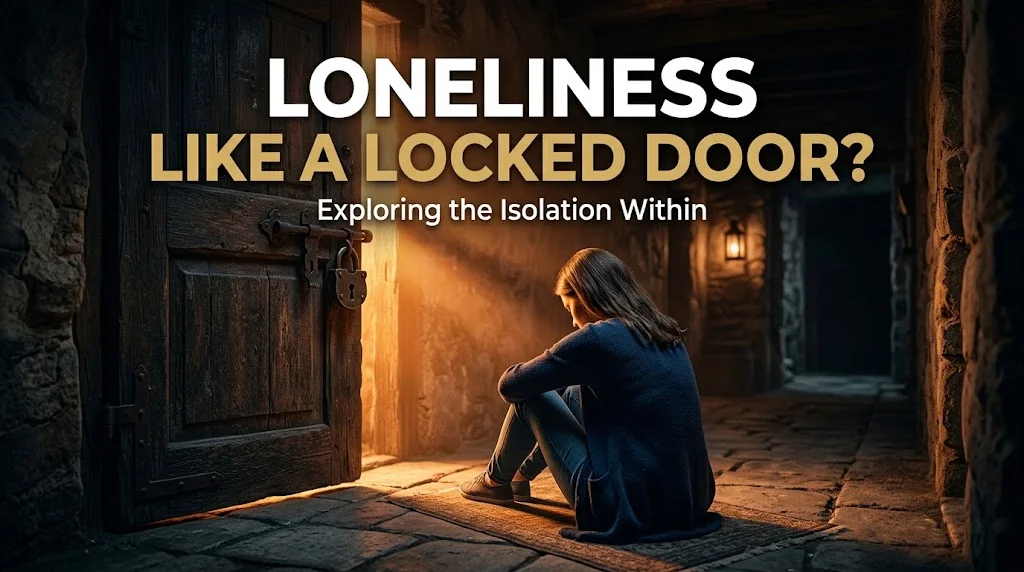
Meaning: Loneliness can feel like being separated from meaningful connection.
Detailed Explanation: A locked door creates a physical barrier. The image can represent emotional distance, isolation, or the inability to let others enter someone’s inner world.
Tone: Dramatic, emotional, introspective.
Examples:
- Her heart felt like a locked door in an empty hallway.
- He carried his loneliness like a door no one could open.
- Their silence stood between them like a locked door.
Loneliness Like a Single Star
Meaning: Loneliness can feel like being isolated in a huge, distant world.
Detailed Explanation: A single star surrounded by darkness creates a strong contrast between one small point of existence and an enormous empty space.
Tone: Poetic, peaceful, wistful.
Examples:
- He felt like a single star lost in an endless sky.
- Her loneliness shone like one star above a sleeping city.
- I sat alone like a distant star beyond the reach of every hand.
Loneliness Like Fog on an Empty Road
Meaning: Loneliness can make life feel uncertain and difficult to navigate.
Detailed Explanation: Fog hides the road ahead and creates a sense of distance. This simile works well for moments when someone feels emotionally lost.
Tone: Mysterious, melancholic, dramatic.
Examples:
- His loneliness followed him like fog on an empty road.
- She moved through the morning like a traveler trapped in fog.
- The uncertainty surrounded him like mist over a deserted highway.
Loneliness Like a Phone That Never Rings
Meaning: Loneliness can involve waiting for communication that never comes.
Detailed Explanation: A silent phone creates an instantly recognizable image of expectation and disappointment.
Tone: Modern, relatable, sad.
Examples:
- Her loneliness was like a phone that never rang.
- He watched the screen like someone waiting for a message that would never arrive.
- The silent phone sat beside him like a reminder of his isolation.
Loneliness Like a House With No Lights
Meaning: Loneliness can make a familiar place feel empty and lifeless.
Detailed Explanation: A dark house usually suggests that nobody is home. It provides a simple image for emotional emptiness.
Tone: Dark, quiet, emotional.
Examples:
- His heart felt like a house with no lights.
- She entered the room like someone returning to an empty house.
- The silence surrounded him like darkness inside an abandoned home.
Loneliness Like a Forgotten Letter
Meaning: Loneliness can feel like having feelings or words that nobody receives.
Detailed Explanation: A forgotten letter represents communication that never reaches its intended person.
Tone: Nostalgic, sentimental, wistful.
Examples:
- Her loneliness was like a forgotten letter in an old drawer.
- He carried his thoughts like words written on a letter no one opened.
- His apology remained like a forgotten letter beneath years of dust.
Loneliness Like an Island in a Vast Ocean
Meaning: Loneliness can make someone feel surrounded by others yet completely separated from them.
Detailed Explanation: An island sits within a huge ocean, creating a powerful image of distance and separation.
Tone: Poetic, dramatic, contemplative.
Examples:
- He felt like an island surrounded by an ocean of strangers.
- Her loneliness stretched around her like water around a distant island.
- In the crowded city, he remained like an island in a vast sea.
Loneliness Like an Unplayed Song
Meaning: Loneliness can feel like having something meaningful inside, but nobody is willing to hear it.
Detailed Explanation: An unplayed song suggests hidden expression, unrealized connection, and untapped emotion.
Tone: Artistic, melancholic, gentle.
Examples:
- His loneliness was like an unplayed song waiting for an audience.
- Her dreams felt like music trapped inside an unplayed song.
- He carried his memories like melodies no one wanted to hear.
Loneliness Like a Shadow at Noon
Meaning: Loneliness can remain present even during bright or busy moments.
Detailed Explanation: A shadow at noon is less obvious than at other times, but it still exists. This image suits hidden loneliness.
Tone: Subtle, reflective, poetic.
Examples:
- Her loneliness followed her like a shadow at noon.
- He smiled in public but carried isolation like a quiet shadow.
- Even among friends, his sadness stayed like a shadow beneath bright sunlight.
Loneliness Like a Bench No One Visits
Meaning: Loneliness can feel like waiting in a place where nobody chooses to stop.
Detailed Explanation: A solitary bench suggests waiting, stillness, and the absence of companionship.
Tone: Quiet, wistful, gentle.
Examples:
- His loneliness was like a bench no one stopped to use.
- She sat quietly like a forgotten bench beneath an old tree.
- The empty park made him feel like a bench waiting for strangers.
Loneliness Like Rain on a Closed Window
Meaning: Loneliness can create the feeling of being close to life but separated from it.
Detailed Explanation: Rain can be heard and seen through a closed window, but the person inside remains separated from the outside world.
Tone: Melancholic, atmospheric, poetic.
Examples:
- Her loneliness fell like rain against a closed window.
- He watched people outside like rain he could see but never touch.
- The evening sounded like rain tapping on a window no one opened.
Loneliness Like a Book Without a Reader
Meaning: Loneliness can feel like having stories, thoughts, and experiences that nobody wants to know.
Detailed Explanation: A book contains an entire world, but without a reader, that world remains unseen.
Tone: Literary, thoughtful, emotional.
Examples:
- He felt like a book without a reader.
- Her memories remained like pages in a book nobody opened.
- His stories gathered dust like an unread novel.
Loneliness Like an Empty Theater After the Show
Meaning: Loneliness can arrive after a lively experience has ended.
Detailed Explanation: An empty theater retains signs of excitement but lacks the audience that created the energy.
Tone: Nostalgic, dramatic, reflective.
Examples:
- His loneliness was like an empty theater after the final show.
- The room felt like a stage after everyone had gone home.
- She remembered happier days like an empty theater remembering applause.
Loneliness Like a Streetlight at Dawn
Meaning: Loneliness can involve standing alone while the world slowly changes around you.
Detailed Explanation: A streetlight remains by itself as darkness fades, making it a strong image of quiet endurance.
Tone: Calm, poetic, hopeful.
Examples:
- He stood alone like a streetlight at dawn.
- Her loneliness glowed like a lamp nobody noticed.
- She watched the sunrise like a streetlight waiting for the city to wake.
Loneliness Like an Unopened Window
Meaning: Loneliness can represent a barrier between a person and the outside world.
Detailed Explanation: A window normally connects an indoor space with the world outside, but an unopened window keeps that connection distant.
Tone: Quiet, symbolic, introspective.
Examples:
- His loneliness was like an unopened window.
- She watched life through the glass like someone afraid to step outside.
- The room felt sealed like a house with every window closed.
Loneliness Like a Boat Without a Harbor
Meaning: Loneliness can feel like having nowhere safe or welcoming to return to.
Detailed Explanation: A boat needs a harbor for rest and protection, so the comparison captures emotional homelessness.
Tone: Poetic, restless, wistful.
Examples:
- He felt like a boat drifting without a harbor.
- Her heart wandered like a vessel searching for somewhere to rest.
- His loneliness moved like a boat lost beyond the shore.
Loneliness Like a Garden After Autumn
Meaning: Loneliness can feel like the loss of something that once brought life and color.
Detailed Explanation: An autumn garden can suggest endings, absence, and memories of earlier beauty.
Tone: Nostalgic, gentle, melancholic.
Examples:
- Her loneliness felt like a garden after autumn.
- His memories stood like bare branches in an empty garden.
- The old friendship felt like summer flowers after the season had ended.
Loneliness Like a Bell Nobody Hears
Meaning: Loneliness can feel like trying to express yourself without being noticed.
Detailed Explanation: A bell usually calls attention, but an unheard bell represents communication that fails to reach others.
Tone: Poetic, haunting, emotional.
Examples:
- His loneliness was like a bell nobody heard.
- She spoke softly like a distant bell swallowed by the wind.
- His hopes rang like bells beyond anyone’s hearing.
Loneliness Like a Photograph With One Person Missing
Meaning: Loneliness can come from noticing the absence of someone important.
Detailed Explanation: A photograph preserves a moment, so a missing person can make the entire memory feel incomplete.
Tone: Nostalgic, personal, bittersweet.
Examples:
- Her loneliness was like a photograph with someone missing.
- The family gathering felt incomplete, like a picture with one face erased.
- He looked at old memories like photographs missing their most important person.
Loneliness Like a Road After Midnight
Meaning: Loneliness can make familiar surroundings seem empty and distant.
Detailed Explanation: A road after midnight often has fewer people, sounds, and signs of activity, creating a quiet sense of isolation.
Tone: Mysterious, reflective, cinematic.
Examples:
- His loneliness stretched like a road after midnight.
- She walked through the silence like a traveler on an empty highway.
- The city felt as deserted as a road after midnight.
Loneliness Like a Radio Between Stations
Meaning: Loneliness can feel like searching for connection but finding only static.
Detailed Explanation: A radio between stations creates noise without meaningful communication, making it a modern image for emotional disconnection.
Tone: Modern, clever, melancholic.
Examples:
- His mind sounded like a radio between stations.
- Her loneliness crackled like static in an empty room.
- He searched for understanding like a radio searching for a clear signal.
Loneliness Like a Cloud Without Rain
Meaning: Loneliness can hold emotion inside without releasing it.
Detailed Explanation: A cloud can carry the possibility of rain while remaining dry, making it a useful comparison for suppressed feelings.
Tone: Poetic, restrained, thoughtful.
Examples:
- Her loneliness was like a cloud that never released its rain.
- He carried sadness like a heavy cloud above his head.
- His unspoken feelings gathered like clouds without rain.
Loneliness Like an Old House in the Woods
Meaning: Loneliness can feel forgotten, distant, and untouched.
Detailed Explanation: An old house deep in the woods suggests separation from ordinary life and human contact.
Tone: Gothic, mysterious, dramatic.
Examples:
- His loneliness stood like an old house hidden in the woods.
- She felt forgotten like a home no traveler could find.
- The silence around him felt like an abandoned cabin beneath the trees.
Loneliness Like a Garden Waiting for Spring
Meaning: Loneliness can involve sadness while still leaving room for hope.
Detailed Explanation: A winter garden looks empty but prepares for renewal. This comparison works well when loneliness may eventually lead to connection.
Tone: Hopeful, gentle, poetic.
Examples:
- Her loneliness was like a garden waiting for spring.
- He carried hope like seeds sleeping beneath cold soil.
- His quiet heart waited like a garden for warmer days.
Top 10 Similes for Loneliness
| Simile | Meaning | Tone |
| Loneliness like an empty train station | Feeling abandoned after others have left | Poetic, melancholic |
| Loneliness like a lighthouse without ships | Giving care or guidance without receiving connection | Bittersweet, hopeful |
| Loneliness like a locked door | Feeling separated from meaningful connection | Dramatic, emotional |
| Loneliness like a single star | Feeling isolated within a vast world | Poetic, wistful |
| Loneliness like fog on an empty road | Feeling lost and uncertain | Mysterious, melancholic |
| Loneliness like a phone that never rings | Waiting for communication that never comes | Modern, relatable |
| Loneliness like a house with no lights | Feeling emotionally empty and alone | Dark, quiet |
| Loneliness like an unanswered echo | Reaching out without receiving a response | Haunting, emotional |
| Loneliness like a boat without a harbor | Having nowhere to feel safe or connected | Restless, wistful |
| Loneliness like a garden waiting for spring | Experiencing isolation while retaining hope | Gentle, hopeful |
Conclusion:
Similes give writers a creative way to describe one of the most complex human emotions. Instead of simply saying someone feels alone, a thoughtful comparison can help readers picture that feeling through familiar images such as an empty train station, a silent phone, a distant star, or a boat without a harbor. These comparisons can add depth to poems, stories, essays, captions, and personal reflections while making emotional writing more memorable. The best Similes match the mood and message of your writing without sounding forced or repetitive. Whether you want to express sadness, isolation, longing, emotional distance, or quiet hope, the right simile can make your words more powerful. Experiment with different images, tones, and sensory details to discover comparisons that feel natural to your voice. With practice, you can use similes to transform ordinary descriptions into vivid and meaningful expressions of loneliness.
FAQs
What are similes for loneliness?
Similes for Loneliness are creative comparisons that describe the feeling of being alone by connecting it to another image, object, person, place, or experience. They commonly use words such as “like” or “as.” For example, “Her loneliness was like an empty train station” compares emotional isolation with a quiet place after everyone has left.
Why should writers use similes for loneliness?
Writers use Similes for Loneliness to make emotional descriptions more vivid and relatable. A simple statement can tell readers that someone feels lonely, while a strong simile helps them imagine and emotionally understand that experience. Similes can also add atmosphere, personality, imagery, and depth to poems, stories, essays, captions, and other forms of creative writing.
What is a good simile?
A good simile creates a clear emotional image and naturally connects the comparison to isolation. For example, “Loneliness was like a phone that never rang” works because it represents waiting for communication that never arrives. Effective similes should feel understandable, original, and appropriate for the mood and context of the writing.
Can similes be positive or hopeful?
Yes, Similes can express hope as well as sadness. A comparison such as “loneliness was like a garden waiting for spring” suggests that isolation may eventually change. Hopeful similes work especially well when a writer wants to show emotional growth, patience, healing, new relationships, or the possibility of connection after a difficult period.
What is the difference between a simile and a metaphor for loneliness?
A simile compares two things using words such as “like” or “as,” while a metaphor makes a direct comparison without those words. For example, “Her loneliness was like an island” is a simile. “Her loneliness was an island” is a metaphor. Both can create strong imagery, but they present comparisons in different ways.
Can I use similes in poetry?
Absolutely. Similes work especially well in poetry because they can create strong visual and emotional imagery with very few words. Poets can compare loneliness with nature, objects, places, sounds, or memories. Images such as an empty road, distant star, silent room, or fading light can create a powerful mood while leaving space for readers to interpret the emotion.
What makes a similes original?
An original simile uses a fresh comparison that readers can understand without feeling that they have seen it repeatedly. Instead of relying on familiar clichés, consider specific objects, places, sounds, or experiences. For example, comparing loneliness to “a radio between stations” creates a modern image of searching for connection while hearing only static.
Are similes suitable for essays?
Yes, but the choice depends on the type of essay. Creative, personal, literary, and reflective essays can benefit greatly from expressive similes. In academic writing, use them more carefully and only when they improve clarity or interpretation. A well-chosen comparison can make an argument or personal experience more engaging without making the writing unclear or overly dramatic.
How can I create my own similes for loneliness?
Start by thinking about what loneliness looks, sounds, feels, or behaves like. Consider empty places, distant objects, unanswered communication, quiet nature, or unfinished experiences. Then connect that image to loneliness using “like” or “as.” For example, if loneliness feels like waiting, you might write, “Her loneliness was like a door waiting for a knock.”
What are some powerful similes ?
Powerful Similes include comparisons such as “like an empty train station,” “like a lighthouse without ships,” “like a phone that never rings,” and “like a boat without a harbor.” Each creates a different emotional effect. Choose one based on whether you want to communicate abandonment, longing, invisibility, isolation, uncertainty, or quiet hope.


