
When something feels difficult, layered, confusing, or hard to understand, the right comparison can make it much easier to describe.
Similes for complex ideas help writers turn abstract thoughts into clear and memorable images by comparing them with familiar things. In this guide, you will find creative similes for describing complicated ideas, situations, emotions, systems, problems, and people while keeping your writing natural, vivid, and easy to understand.
Definition of Similes For Complex
Similes for complex ideas are comparisons that describe something complicated, difficult, layered, or hard to understand by connecting it to a familiar image or experience. They commonly use “like” or “as” to show the comparison.
For example, saying “The problem was like a maze with hidden doors” helps readers imagine how difficult and confusing the problem feels. The comparison gives an abstract quality a concrete image, making the description easier to picture.
What Is a Simile?
A simile is a figure of speech that directly compares two different things, usually with words such as “like” or “as.” Writers use similes to create vivid pictures, explain ideas, emphasize qualities, and make language more memorable. (MasterClass)
Example
- The instructions were like a maze with no clear exit.
- Her explanation was as tangled as a ball of yarn.
- The situation changed like clouds before a storm.
- His reasoning was as layered as an onion.
- Solving the puzzle felt like climbing a mountain in fog.
A simile differs from a metaphor because a simile openly signals the comparison with words such as “like” or “as,” while a metaphor usually makes the comparison directly. (Literary Devices)
Why Use Similes For Complex Ideas in Writing?
- They clarify difficult ideas: A familiar comparison can make an abstract concept easier to understand.
- They create vivid imagery: Readers can picture a complicated situation instead of simply hearing that it is “difficult.”
- They add emotional depth: A complex problem can feel frustrating, mysterious, overwhelming, or fascinating depending on the comparison.
- They make writing memorable: Fresh comparisons give ordinary descriptions more personality.
- They strengthen storytelling: Similes can help readers experience a character’s confusion, struggle, or discovery.
- They improve descriptions: Instead of repeating words such as complicated or difficult, writers can show exactly what the complexity feels like.
- They make abstract subjects concrete: Ideas such as politics, emotions, technology, relationships, and decision-making can become easier to visualize.
- They support different tones: A comparison can sound humorous, dramatic, poetic, serious, or mysterious depending on the image.
Types of Similes
Writers can create similes for complex subjects in several ways. Some focus on visual complexity, while others emphasize confusion, depth, difficulty, movement, or emotional weight.
Descriptive Similes
Descriptive similes compare a complex subject with something that has a complicated appearance or structure.
Example
- The diagram was like a spiderweb, with lines crossing in every direction.
- The old building was as intricate as a carved wooden box.
- Her plan looked like a puzzle with hundreds of pieces.
Emotional Similes
Emotional similes describe the feelings that complicated situations create.
Example
- The decision felt like carrying a suitcase filled with stones.
- His thoughts were as restless as waves during a storm.
- The uncertainty hung over her like thick fog.
Conceptual Similes
Conceptual similes explain difficult ideas by connecting them to familiar systems, objects, or experiences.
Example
- The legal process was like navigating a city without a map.
- Learning the new software felt as confusing as reading a book in a foreign language.
- The theory was like a locked room with several hidden keys.
Action-Based Similes
Action-based similes show how complexity develops, changes, or behaves.
Example
- The discussion moved like a river splitting into many streams.
- The problem grew like vines covering an abandoned wall.
- His explanation twisted like smoke in the wind.
Writing Tips and Common Mistakes
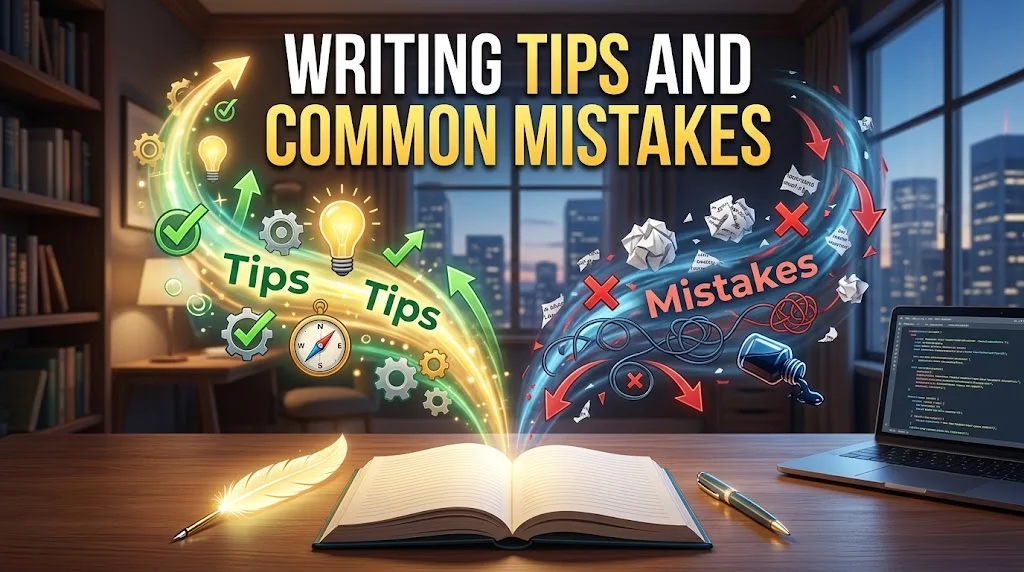
Useful Tips
- Choose a clear connection: Make sure the comparison shares a real quality with the subject.
- Use familiar images: A reader should understand the comparison without extra explanation.
- Avoid forced comparisons: If the connection feels unnatural, choose another image.
- Match the tone: Use serious imagery for formal writing and playful imagery for humorous writing.
- Add specific details: Instead of saying something is “like a maze,” describe the maze in a way that supports your meaning.
- Prefer fresh comparisons: Original similes can make your writing stand out.
- Keep the comparison focused: Highlight one main quality rather than trying to compare everything at once.
- Use similes selectively: Too many comparisons can distract readers from your main point. (MasterClass)
- Read the sentence aloud: This helps you notice awkward wording or comparisons that do not flow naturally.
- Consider your audience: Choose images that your intended readers can recognize easily.
Common Mistakes to Avoid
- Using clichés too often: Phrases such as “as busy as a bee” may sound predictable when a more specific comparison would work better.
- Making the comparison unclear: “The problem was like something complicated” does not give readers a useful image.
- Mixing comparisons: Avoid combining unrelated images in one sentence.
- Using a metaphor instead of a simile: “The problem is a maze” is a metaphor; “The problem is like a maze” is a simile.
- Overloading a sentence: Several similes in one sentence can make the writing harder to follow.
- Choosing an inaccurate image: The comparison should support the intended meaning.
- Forcing humor into serious writing: A funny comparison may weaken a serious subject.
- Repeating the same comparison: Using “like a maze” throughout an article can make the writing feel repetitive.
Similes For Complex — Main Section
Like a Maze With Hidden Doors
Meaning: Something extremely complicated, confusing, and difficult to navigate.
Detailed Explanation: This simile suggests that the subject contains many paths, choices, and unexpected problems. It works well for difficult systems, decisions, or situations.
Tone: Mysterious, dramatic
Examples:
- The legal process was like a maze with hidden doors, and every turn revealed another requirement.
- Understanding the old software felt like a maze with hidden doors.
- Their family history was like a maze with hidden doors, filled with stories no one had fully explained.
As Tangled as a Ball of Yarn
Meaning: Something has many connected parts that seem difficult to separate.
Detailed Explanation: A tangled ball of yarn provides an easy image for complicated thoughts, relationships, plans, or arguments.
Tone: Descriptive, relatable
Examples:
- Her thoughts were as tangled as a ball of yarn after the long meeting.
- The instructions became as tangled as a ball of yarn.
- Their disagreement was as tangled as a ball of yarn, with one issue wrapped around another.
Like a Puzzle Missing Its Picture
Meaning: Something contains many pieces but lacks enough information to make sense of them.
Detailed Explanation: This comparison works especially well when a person has evidence or information but cannot see the complete answer.
Tone: Thoughtful, mysterious
Examples:
- The investigation felt like a puzzle missing its picture.
- His memories were like a puzzle missing its picture.
- The research project seemed like a puzzle missing its picture until the final report arrived.
As Unpredictable as Shadows at Sunset
Meaning: Something changes quickly and becomes difficult to predict.
Detailed Explanation: Shadows stretch, shrink, and shift as the sun moves, making them a strong comparison for changing situations.
Tone: Poetic, mysterious
Examples:
- The negotiations were as unpredictable as shadows at sunset.
- Her mood seemed as unpredictable as shadows at sunset.
- The market felt as unpredictable as shadows at sunset.
Like a Computer Running Too Many Programs
Meaning: Something contains too many demands or processes at once.
Detailed Explanation: A computer can slow down when it handles too many tasks. This familiar image works well for busy minds, organizations, and complicated projects.
Tone: Modern, relatable
Examples:
- My thoughts felt like a computer running too many programs.
- The department operated like a computer running too many programs.
- The project became like a computer running too many programs.
As Full of Turns as an Underground Tunnel
Meaning: Something has many unexpected changes or directions.
Detailed Explanation: Underground tunnels often contain turns that prevent people from seeing what comes next.
Tone: Mysterious, dramatic
Examples:
- The story was as full of turns as an underground tunnel.
- The investigation became as full of turns as an underground tunnel.
- His career path was as full of turns as an underground tunnel.
Like a Bridge Built From Moving Pieces
Meaning: Something depends on parts that constantly change.
Detailed Explanation: A bridge normally provides stability, but moving pieces create uncertainty. This comparison suits unstable plans and changing systems.
Tone: Dramatic, conceptual
Examples:
- The agreement was like a bridge built from moving pieces.
- The business plan felt like a bridge built from moving pieces.
- Their relationship was like a bridge built from moving pieces.
As Complicated as a Family Recipe Passed Through Generations
Meaning: Something has many details, traditions, and changes accumulated over time.
Detailed Explanation: A family recipe can change as each generation adds its own adjustments, making it a warm comparison for evolving traditions and systems.
Tone: Warm, thoughtful
Examples:
- Their family history was as complicated as a family recipe passed through generations.
- The organization’s traditions were as complicated as a family recipe passed through generations.
- The process was as complicated as a family recipe passed through generations.
Like a Door With Ten Keys and One Lock
Meaning: Something requires many possible solutions before one correct answer works.
Detailed Explanation: The unusual mismatch between many keys and one lock creates an image of trial, uncertainty, and complexity.
Tone: Mysterious, playful
Examples:
- The problem was like a door with ten keys and one lock.
- Finding the right solution felt like opening a door with ten keys and one lock.
- The investigation was like a door with ten keys and one lock.
As Twisted as Roots Beneath an Old Tree
Meaning: Something has deep, hidden, and interconnected causes.
Detailed Explanation: Tree roots spread underground and cross paths that remain invisible from the surface. This simile works well for deep problems and complicated histories.
Tone: Natural, reflective
Examples:
- The conflict was as twisted as roots beneath an old tree.
- Her fears were as twisted as roots beneath an old tree.
- The problem had causes as twisted as roots beneath an old tree.
Like a Map of Stars Without Constellations
Meaning: Something contains many individual details but lacks an obvious pattern.
Detailed Explanation: Stars may fill the sky, but without recognizing constellations, their relationships can seem random.
Tone: Poetic, mysterious
Examples:
- The data looked like a map of stars without constellations.
- His notes were like a map of stars without constellations.
- The evidence seemed like a map of stars without constellations.
As Busy as a Workshop Full of Moving Machines
Meaning: Something contains many active parts working simultaneously.
Detailed Explanation: A busy workshop creates a strong image of movement, noise, coordination, and multiple processes.
Tone: Energetic, practical
Examples:
- The office was as busy as a workshop full of moving machines.
- The production system was as busy as a workshop full of moving machines.
- Her mind felt as busy as a workshop full of moving machines.
Like a Thread Pulled Through a Hundred Needles
Meaning: Something must pass through many difficult stages.
Detailed Explanation: A thread passing through many needles suggests a long, delicate, and complicated process.
Tone: Creative, dramatic
Examples:
- The approval process was like a thread pulled through a hundred needles.
- Completing the project felt like a thread pulled through a hundred needles.
- The investigation moved like a thread pulled through a hundred needles.
As Dense as Clouds Before a Storm
Meaning: Something feels heavy, unclear, and filled with tension.
Detailed Explanation: Thick storm clouds block the sky and signal that something may be coming. This makes the simile useful for uncertain or tense situations.
Tone: Dramatic, atmospheric
Examples:
- The atmosphere was as dense as clouds before a storm.
- The unresolved issue felt as dense as clouds before a storm.
- His thoughts were as dense as clouds before a storm.
Like a Lock With a Different Code Every Day
Meaning: Something constantly changes, making it difficult to solve.
Detailed Explanation: A changing code prevents people from relying on yesterday’s solution. This comparison works well for unstable rules, systems, or situations.
Tone: Modern, frustrating
Examples:
- The regulations felt like a lock with a different code every day.
- Understanding the market was like a lock with a different code every day.
- The project requirements became like a lock with a different code every day.
As Complex as a Symphony Played by a Hundred Musicians
Meaning: Something contains many coordinated elements that must work together.
Detailed Explanation: A large symphony depends on numerous musicians following different parts while contributing to one whole.
Tone: Elegant, sophisticated
Examples:
- The organization was as complex as a symphony played by a hundred musicians.
- The production process was as complex as a symphony played by a hundred musicians.
- The project required coordination as complex as a symphony played by a hundred musicians.
Like a Road Map Covered in Handwritten Detours
Meaning: Something has a basic structure but many added complications.
Detailed Explanation: Handwritten detours suggest that the original route has changed repeatedly because of new problems or discoveries.
Tone: Relatable, descriptive
Examples:
- The project plan looked like a road map covered in handwritten detours.
- Her career journey was like a road map covered in handwritten detours.
- The investigation became like a road map covered in handwritten detours.
As Difficult to Untangle as Earphones in a Pocket
Meaning: Something seems simple at first but becomes surprisingly complicated.
Detailed Explanation: Tangled earphones provide a familiar everyday example of a small problem becoming frustratingly difficult.
Tone: Humorous, relatable
Examples:
- The instructions were as difficult to untangle as earphones in a pocket.
- Their disagreement was as difficult to untangle as earphones in a pocket.
- The problem became as difficult to untangle as earphones in a pocket.
Like a House With Rooms Hidden Behind Rooms
Meaning: Something contains several layers that reveal more complexity as you explore.
Detailed Explanation: Hidden rooms create a strong image of discovery and depth. This simile suits stories, personalities, theories, and organizations.
Tone: Mysterious, imaginative
Examples:
- The novel was like a house with rooms hidden behind rooms.
- Her personality was like a house with rooms hidden behind rooms.
- The subject became like a house with rooms hidden behind rooms.
As Shifting as Sand Under Running Water
Meaning: Something changes continuously and refuses to remain stable.
Detailed Explanation: Running water moves sand and changes its shape, making this a useful comparison for unstable plans, opinions, or conditions.
Tone: Poetic, uncertain
Examples:
- The situation was as shifting as sand under running water.
- Their plans were as shifting as sand under running water.
- Public opinion became as shifting as sand under running water.
Like a Conversation Between a Hundred Radio Stations
Meaning: Something contains many competing voices or ideas.
Detailed Explanation: Many radio stations playing simultaneously create an image of noise and competing information.
Tone: Humorous, energetic
Examples:
- The meeting sounded like a conversation between a hundred radio stations.
- My thoughts felt like a conversation between a hundred radio stations.
- The online debate became like a conversation between a hundred radio stations.
As Detailed as a Blueprint for a Floating City
Meaning: Something contains an extraordinary amount of planning and information.
Detailed Explanation: A blueprint for a huge and unusual structure suggests precision, planning, and complexity.
Tone: Imaginative, technical
Examples:
- The proposal was as detailed as a blueprint for a floating city.
- The engineering plan looked as detailed as a blueprint for a floating city.
- Her strategy was as detailed as a blueprint for a floating city.
Like a Knot That Tightens When You Pull It
Meaning: Trying to solve something incorrectly can make it more complicated.
Detailed Explanation: Some knots become tighter when pulled. This makes a useful comparison for problems that worsen when handled without care.
Tone: Cautionary, practical
Examples:
- The dispute was like a knot that tightens when you pull it.
- Their communication problem became like a knot that tightens when you pull it.
- The situation felt like a knot that tightens when you pull it.
As Intricate as Frost Patterns on a Window
Meaning: Something contains many delicate and detailed elements.
Detailed Explanation: Frost can form complex natural patterns, making this simile ideal for beautiful, detailed, or subtle complexity.
Tone: Poetic, elegant
Examples:
- The design was as intricate as frost patterns on a window.
- Her writing was as intricate as frost patterns on a window.
- The architecture was as intricate as frost patterns on a window.
Like a Library Where Every Book Leads to Another
Meaning: One piece of information creates another question or subject to explore.
Detailed Explanation: This simile captures the expanding nature of knowledge and research.
Tone: Intellectual, curious
Examples:
- The subject was like a library where every book leads to another.
- Researching the topic felt like exploring a library where every book leads to another.
- His questions were like a library where every book leads to another.
As Complicated as a River Delta Seen From Above
Meaning: Something divides into many connected branches.
Detailed Explanation: A river delta contains numerous channels that spread outward and reconnect with the larger landscape.
Tone: Geographic, analytical
Examples:
- The organization was as complicated as a river delta seen from above.
- The argument became as complicated as a river delta seen from above.
- The causes of the problem were as complicated as a river delta seen from above.
Like a Shadow Made of Other Shadows
Meaning: Something contains layers of uncertainty, influence, or hidden meaning.
Detailed Explanation: A shadow made of other shadows creates an intentionally abstract image for situations where one mystery hides another.
Tone: Mysterious, poetic
Examples:
- The character’s motives were like a shadow made of other shadows.
- The mystery became like a shadow made of other shadows.
- The truth seemed like a shadow made of other shadows.
Top 10 Similes For Complex
| Simile | Meaning | Tone |
| Like a maze with hidden doors | Extremely difficult to navigate or understand | Mysterious |
| As tangled as a ball of yarn | Highly confused or interconnected | Relatable |
| Like a puzzle missing its picture | Difficult because essential context is missing | Thoughtful |
| As layered as an onion | Contains several levels or meanings | Analytical |
| Like a spiderweb of connections | Contains many interconnected parts | Analytical |
| Like a river splitting into a hundred streams | Develops into many directions | Poetic |
| Like a clock with hundreds of gears | Depends on many interconnected components | Technical |
| Like a puzzle inside another puzzle | One difficulty hides another | Mysterious |
| As deep as an ocean with no visible floor | Contains great unseen depth | Reflective |
| Like a library where every book leads to another | Each answer creates another question | Intellectual |
Conclusion:
Similes for complex ideas give writers a simple and creative way to describe situations that feel difficult, layered, confusing, or challenging. Instead of repeatedly using words such as complicated, difficult, or confusing, you can create stronger imagery by comparing those ideas with familiar things. A maze with hidden doors, a tangled ball of yarn, or a river splitting into many streams can instantly help readers understand what complexity feels like.
These comparisons can make essays, stories, blog posts, poems, and everyday writing more vivid and memorable. The key is to choose a simile that clearly matches your intended meaning and fits your tone. Whether you want to sound thoughtful, dramatic, humorous, poetic, or professional, the right comparison can make your words more engaging. Use these similes for complex subjects naturally, avoid overused expressions, and let your comparisons make challenging ideas easier for readers to picture and understand.
FAQs About Similes For Complex
What are similes for complex ideas?
Similes for complex ideas are comparisons that describe something difficult, complicated, layered, or confusing by connecting it to a familiar image. They commonly use words such as “like” or “as.” For example, saying “The problem was like a maze with hidden doors” gives readers a clear picture of how difficult the situation is to understand or navigate.
What is a good simile for something complex?
A strong simile for something complex is “like a maze with hidden doors.” It suggests that the subject has multiple paths, unexpected challenges, and no obvious solution. Other useful comparisons include “as tangled as a ball of yarn,” “like a puzzle inside another puzzle,” and “like a spiderweb of connections.”
How do similes make complex ideas easier to understand?
Similes make complex ideas easier to understand by connecting unfamiliar concepts with familiar images. When readers recognize something such as a maze, puzzle, or tangled thread, they can quickly visualize the intended meaning. This technique turns abstract or difficult information into something concrete, memorable, and easier to process.
Can I use similes for complex ideas in academic writing?
Yes, you can use similes for complex ideas in academic writing when they clarify rather than distract from the subject. A carefully chosen comparison can explain an abstract concept or introduce an unfamiliar idea. However, formal academic writing should use similes sparingly and maintain a precise, professional tone throughout the discussion.
What is a creative simile for a complicated problem?
A creative simile for a complicated problem is “like a knot that tightens when you pull it.” This comparison suggests that an incorrect attempt to solve the problem can make it even harder. It works particularly well when describing disagreements, difficult decisions, technical challenges, or situations that become more complicated over time.
Are similes for complex subjects useful in creative writing?
Yes. Similes for complex subjects can make creative writing more vivid by helping readers visualize complicated emotions, personalities, relationships, mysteries, and situations. A comparison such as “her thoughts were like a river splitting into a hundred streams” creates a stronger mental image than simply saying that her thoughts were complicated.
What is the difference between a simile and a metaphor?
A simile makes a direct comparison using words such as “like” or “as.” For example, “The problem was like a maze” is a simile. A metaphor makes the comparison directly without those connecting words, such as “The problem was a maze.” Both can describe complex ideas, but they create slightly different effects.
How can I create my own similes for complex things?
Start by identifying the exact quality you want to describe, such as confusion, depth, difficulty, or interconnectedness. Then think of a familiar object or experience that shares that quality. For example, if something has many connected parts, you might compare it to a spiderweb. Keep the comparison natural, specific, and easy for your audience to understand.
Should I avoid common similes when describing complex ideas?
You do not need to avoid every familiar simile, but original comparisons often make writing more memorable. Common expressions can work when they communicate your meaning clearly. However, if a comparison feels predictable or does not add useful imagery, replace it with a more specific image that better reflects the exact type of complexity you want to describe.
What is the best way to use similes for complex writing?
The best approach is to choose a comparison that matches your exact meaning and writing style. Use one strong simile rather than several unnecessary ones. Make sure readers can understand the connection quickly, and avoid forcing comparisons into sentences. A well-chosen simile should clarify your idea, strengthen imagery, and make your writing feel natural.


